Empowering tribal youth through education and handicrafts, blending tradition with sustainable future opportunities.
At KISS, education is not just about textbooks—it’s about empowering young people to embrace who they are and where they come from. Our Handicraft (Human Resource Development) Training programme helps tribal youth rediscover and refine their traditional crafts while building sustainable futures.
Why This Matters
For indigenous communities, crafts like Saora painting, applique, embroidery, wood carving, and golden grass weaving are living expressions of culture, identity, and a deep bond with nature. However, these traditions face the threat of decline as younger generations migrate in search of work.
This programme tackles these challenges head-on:
Social Impact
By creating local livelihood opportunities, it reduces migration and fosters self-sufficiency rooted in cultural pride.
Educational Impact
It integrates tribal knowledge systems with formal learning, making education practical and engaging—especially for first-generation learners.
Environmental Impact
Traditional crafts use natural, locally sourced materials such as bamboo, Sabai grass, clay, and natural dyes, promoting sustainable practices and reducing reliance on polluting industrial goods.
Relevance to Tribal Communities
The programme is a tool for cultural revitalization, economic empowerment, community development, and environmental harmony.
What We Do
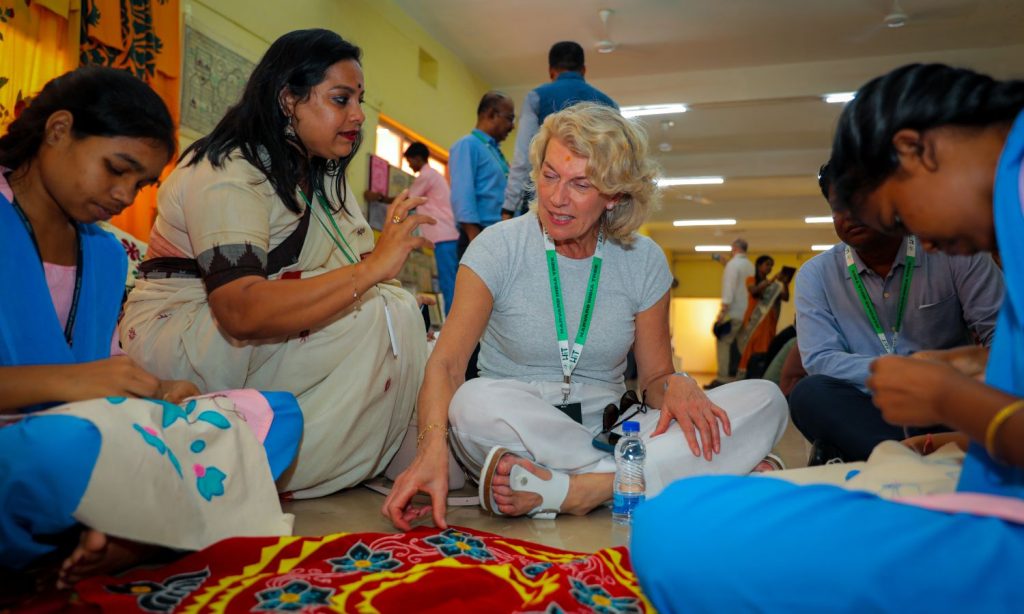
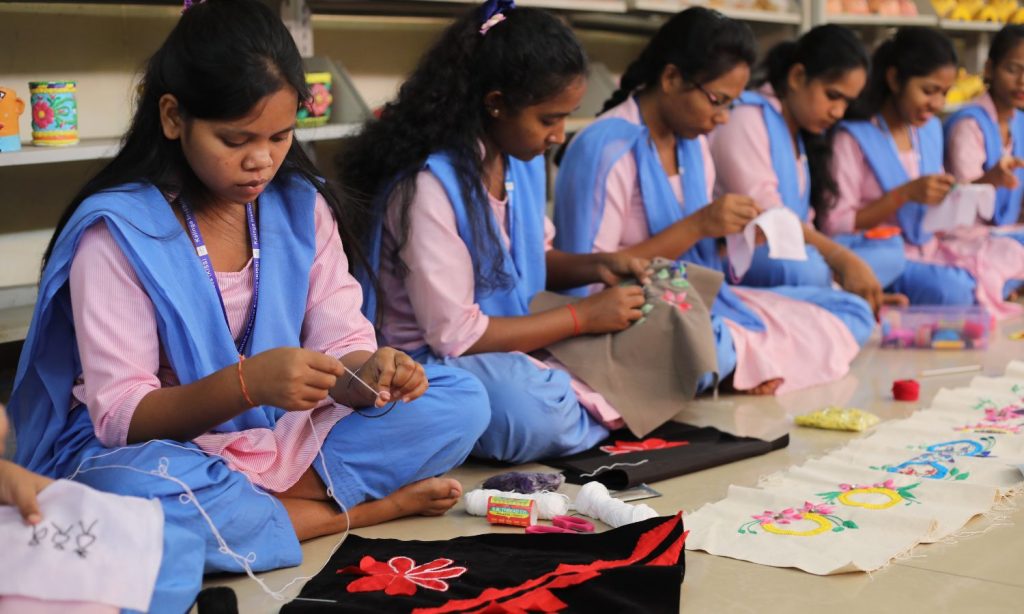
The Handicraft Training Programme is a residential capacity-building initiative implemented on the KISS campus.
Training Focus
Five traditional crafts—Saora Painting, Applique & Embroidery, Wood Carving, Golden Grass Craft, and Tribal Painting.
Participants
200 students (aged 18 and above by 2018) took part in the training.
Duration
A structured 575-hour product training calendar was developed to ensure comprehensive skill development.
Certification
Upon completion, all participants received Artisan Cards from the nodal Government Department, officially recognizing their skills.
Impact Metrics
200 tribal students trained in 5 batches across 5 crafts
Artisan Cards enabling access to markets and opportunities
Cultural heritage revived through skill transmission
Reduced migration and strengthened community resilience