The TIGR2ESS Project is a collaborative research initiative aimed at addressing the paradox of high agricultural productivity alongside persistent malnutrition in tribal-dominated districts of Odisha. Implemented by a consortium of academic universities and NGOs from the UK and India, and funded by the Global Challenges Research Fund (GCRF), this project is led by the University of Cambridge, UK, with KISS playing a critical role in on-ground implementation.
Why This Matters
Despite advances in infrastructure and food systems, malnutrition rates remain alarmingly high in Odisha’s tribal districts, particularly Koraput and Kandhamal. Women and children of Scheduled Tribes face disproportionate levels of food insecurity, even as the region produces significant agricultural output. TIGR2ESS seeks to:
Understand the complex interplay between agriculture, labor, nutrition, and gender roles.
Highlight how food availability does not automatically translate into improved nutrition.
Empower tribal youth through participation in cutting-edge research, giving them tools to advocate for systemic change.
What We Do
The project combined research, community engagement, and capacity building to uncover patterns in food security and livelihoods.
Research Protocol Workshop (Koraput, February 2019)
Brought together UK and Indian research partners.
Trained tribal youth and KISS-DU PG students as enumerators, enhancing their research capabilities.
GCRF Minor Project with ICRISAT and University of Reading (2019–2022)
Used wearable technology to explore gendered labor patterns and their link to nutrition and productivity.
Provided deeper understanding of seasonal work trends, intra-household dynamics, and nutrition outcomes.
Geographic Coverage
Profiling conducted in six villages (three blocks per district, two villages from each block) across Koraput and Kandhamal.
Field Data Collection (June 2019 onwards)
Participatory village visits built trust and provided rich qualitative insights.
Data collection tools included:
Semi-structured interviews
Food mapping & seasonal calendars
Household surveys
Social/resource mapping
Anthropometric measurements
Focus Group Discussions (FGDs)
Food Insecurity Experience Scale
24-hour dietary recalls
Key informant interviews with ASHA & Anganwadi workers
Interventions
Research on Livelihood Patterns
Understanding poverty traps and economic dynamics in tribal households.
Gender Analysis using Wearable Tech
Studying gender roles and labor division to inform interventions.
Reducing Inequalities through Inclusion
Ensuring active participation of tribal communities in research.
Health & Nutrition Assessments
Using anthropometry and food insecurity scales to link agriculture and nutrition.
Reducing Inequalities through Inclusion
Ensuring active participation of tribal communities in research.
Food Mapping and Dietary Surveys
Analyzing seasonal food availability and dietary diversity.
Training Tribal Youth in Research
Empowering local youth and students as skilled researchers.
Labour and Productivity Studies
Exploring how labor patterns influence economic and health outcomes.
International Academic Collaborations
Partnering with leading universities for knowledge exchange.
Relevant SDGs
Impact Metrics
200+
households surveyed across six villages
Include
food maps, seasonal calendars, and gendered labor analyses
20
tribal youth and 20 KISS-DU PG students trained in advanced research methodologies
Created
participant films, animation videos, and knowledge briefs (linked to CHIRAG project outputs)
Testimonials: Voices of Change
The project combined research, community engagement, and capacity building to uncover patterns in food security and livelihoods.
— Community Member, Kandhamal
IVRS gave us information in our own language. For the first time, women in our village could call and ask questions without hesitation.
Tribal Youth Volunteer, Koraput
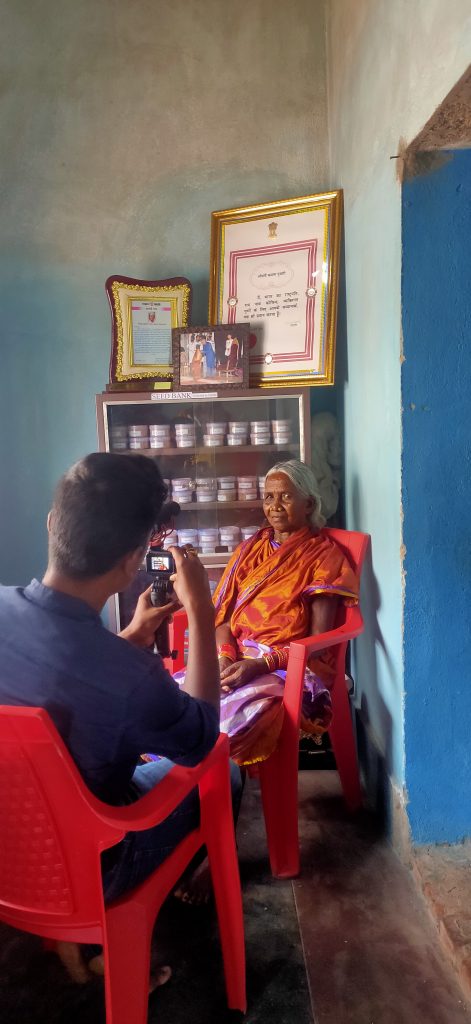
Through CHIRAG, I learned to use technology to document our food practices and share our stories with the world. Earlier, I never thought I could operate a camera or moderate an audio platform. Now, our voices are being heard.
Partners
University of Cambridge (Lead Partner)
University of East Anglia, UK
Collaborations with ICRISAT, Reading University, and Indian research networks
Featured Links
Climate & Food Security in Odisha
Understand how climate change is impacting rural livelihoods and food systems in Odisha.
TIGR2ESS underscores how interdisciplinary research, combined with local participation, can drive transformational change in addressing food insecurity and malnutrition in tribal communities.