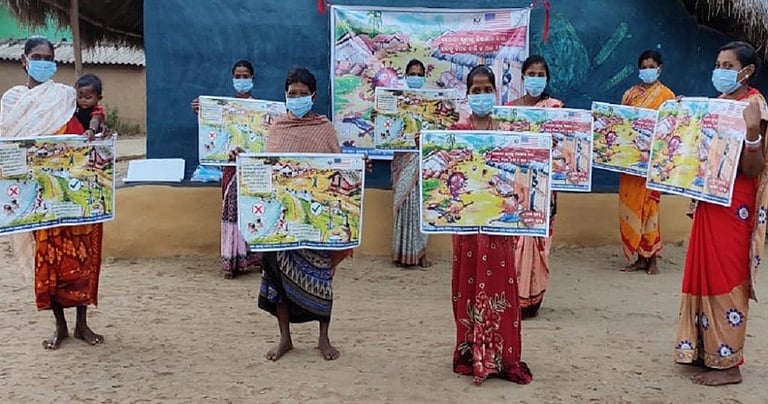
Navigating overlapping crises with resilience and preparedness
Odisha has long been recognised as a global leader in disaster preparedness and response. From Cyclone Phailin (2013) to Cyclone Fani (2019), the state has demonstrated how timely action and strong systems can save lives.
However, the simultaneous impact of Cyclone Amphan and the COVID-19 pandemic introduced an unprecedented layer of complexity — challenging existing disaster management frameworks and requiring rapid adaptation at every level.
This initiative, supported by JICA, focused on strengthening Disaster Risk Management (DRM) systems to respond effectively to such compound risks, where natural disasters and public health emergencies intersect.
The convergence of a large-scale cyclone with a global pandemic exposed critical gaps in conventional disaster response systems.
Key interventions included:
These challenges highlighted the urgent need to rethink disaster preparedness in the context of cascading and concurrent risks.
The project focused on capturing lessons from Cyclone Amphan and translating them into actionable strategies to strengthen DRM systems across Odisha and beyond.
Key interventions included:
Through this, the project contributed to localising the priorities of the Sendai Framework for Disaster Risk Reduction (SFDRR) within real-world, high-risk contexts.
Field research and implementation conducted across 6 coastal districts: Balasore, Bhadrak, Kendrapada, Khordha, Puri, and Ganjam
Strengthened preparedness of government systems and communities for managing compound disaster risks
302 households directly engaged through field-level interventions and assessments
Improved integration of health safety protocols within disaster response mechanisms
Creation of knowledge resources to inform policy and practice beyond Odisha